



When faced with a Parkinson’s diagnosis in February 2020, Keith Wilson, a seasoned runner, gave away his running shoes, thinking it would be the end of his much loved pastime.
Today, the grandad and retired lecturer knows that activity is good for his condition, having learned of the benefits at a Parkinson’s UK talk on the topic.
The discovery has led him to take part in numerous challenges, from ultramarathons and cycling events to scaling mountains.
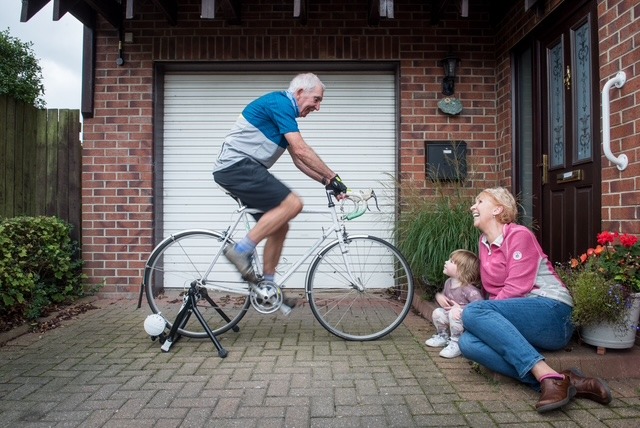
Here, the 74-year-old married father, grandfather and godfather shares what motivates him and how discovering the benefits of virtual reality has led to him helping others with Parkinson’s.
Keith said: “When I’m active, I feel good. I still have strength and plenty of stamina. As soon as I slow down, I feel tired and the aches return. My challenges are driven by a need for adrenaline and natural dopamine. It keeps me going. It gives me a dopamine hit doing them and a dopamine boost planning them and reflecting on them. My motivation is to try and stay alert physically and mentally.”
Acknowledging Keith’s need for challenges, his consultant shared the chemical similarities between adrenaline and dopamine, suggesting that the thrill-seeker explore rollercoasters. Inspired by this advice, in 2022, Keith took his then 14-year-old godsons, twins Ben and Miles, to Florida, along with his supportive wife Jill, to test the theory out on his symptoms.
The devoted family man, who is also father to two daughters, Danielle and Helene, said: “Ben and Miles’ mother Joanne was a close family friend who tragically died two weeks after their birth, leaving behind husband Julian, their daughter, three-year-old Amelia, and their newborn twins. Julian asked us for help early on and, over the years, we have remained very close and continue to holiday together.”
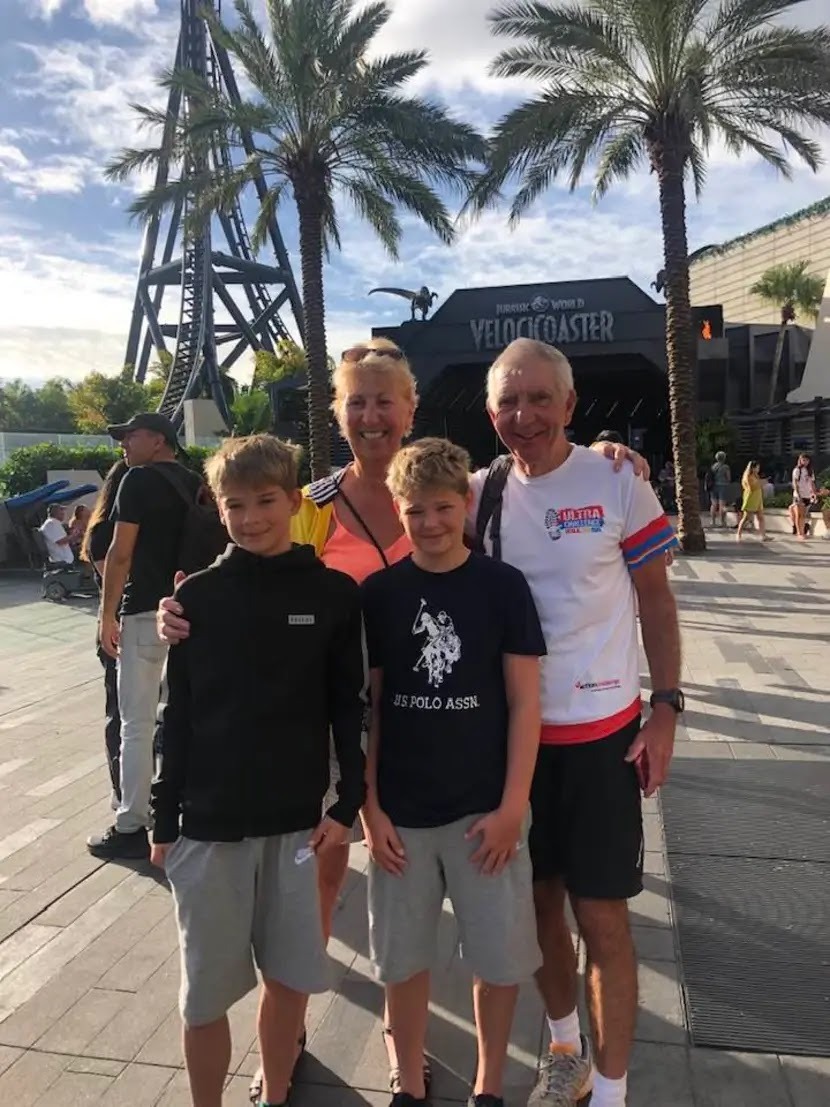
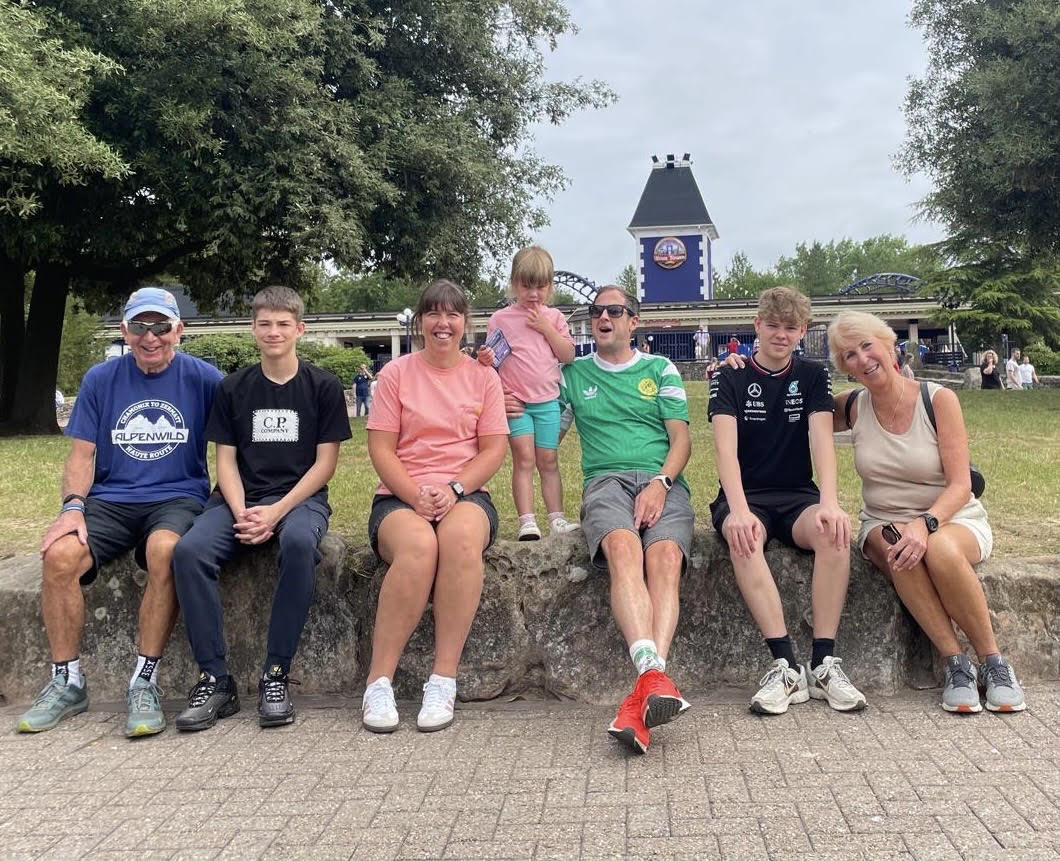
“It was in Florida on those rollercoasters that I made the connection between adrenaline and lessening of my Parkinson’s symptoms. A discovery that we as a family have not looked back on. Since then, we’ve visited Alton Towers every year.”
Nonetheless, it was a chance encounter with a virtual reality headset that led Keith to explore an alternative, accessible solution for people with Parkinson’s who may struggle with theme parks and extreme exercise regimes.
Keith said: “While we were staying in Florida, the twins played with a VR headset. Watching them move in the virtual world gave me the idea of using virtual reality as a way of initiating exercise for people with Parkinson’s who weren’t exercising sufficiently, breaking through the apathy.”
Buoyed by the idea and supported by a Parkinson’s UK grant, Keith ran a trial of virtual reality headset classes for people living with Parkinson’s in County Durham. Participants could visit the Taj Mahal, take part in an exercise class, or climb the Acropolis and the effects were soon visible.
To date, dozens of people with Parkinson’s have joined his VR workshops, and many more have taken part in online tutorials, using VR headsets loaned out through crowdfunding.
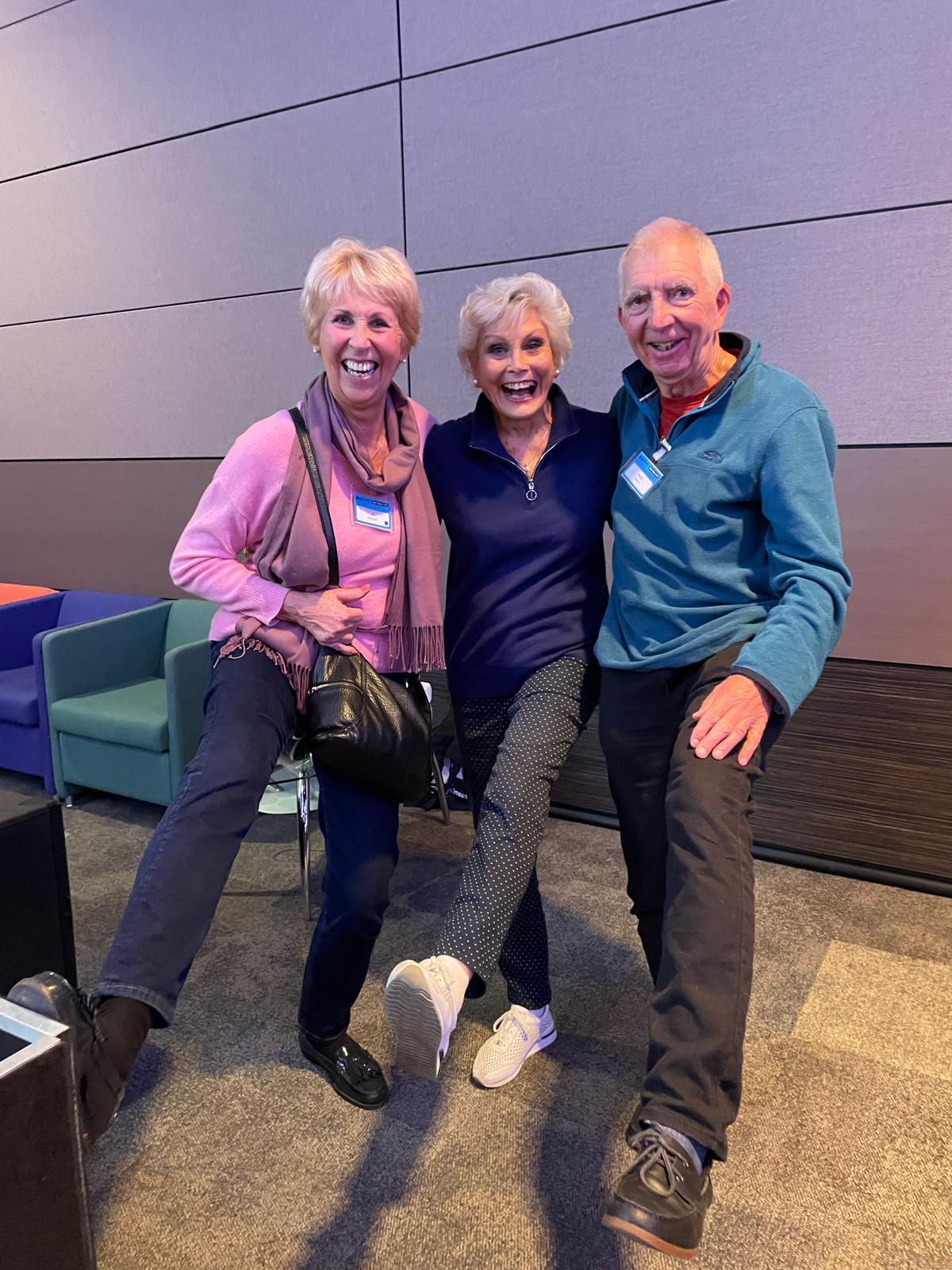
In October, honouring his achievements, Keith was presented with a Parkinson’s UK Community award at Par-Con, a flagship event for the Parkinson’s community. Also in attendance was broadcaster Angela Rippon, who channelled Keith’s passion for activity by running a dance session to promote the physical and mental benefits.
Anna Castiaux, Physical Activity Lead at Parkinson’s UK, said: “Keith is an incredible part of the Parkinson’s community and so deserving of our award. We are very grateful to him for championing virtual reality which is a fascinating form of physical activity. Being active is one of the best ways to manage Parkinson’s symptoms; it can be as important as medication in improving both long-term physical and mental wellbeing.”
Keith added: “I came across the benefits of vigorous exercise almost by accident, but it is now accepted as one of the best ways to fight Parkinson’s, and I’m tackling it head-on. I was overwhelmed to receive the award from Parkinson’s UK. But what’s most important is that it highlights the need to support people living with Parkinson’s, and to encourage more fundraising towards research and finding a cure.”
To find out more about Parkinson’s and the work of Parkinson’s UK, visit www.parkinsons.org.uk.





Leave a Comment
You must be logged in to post a comment.