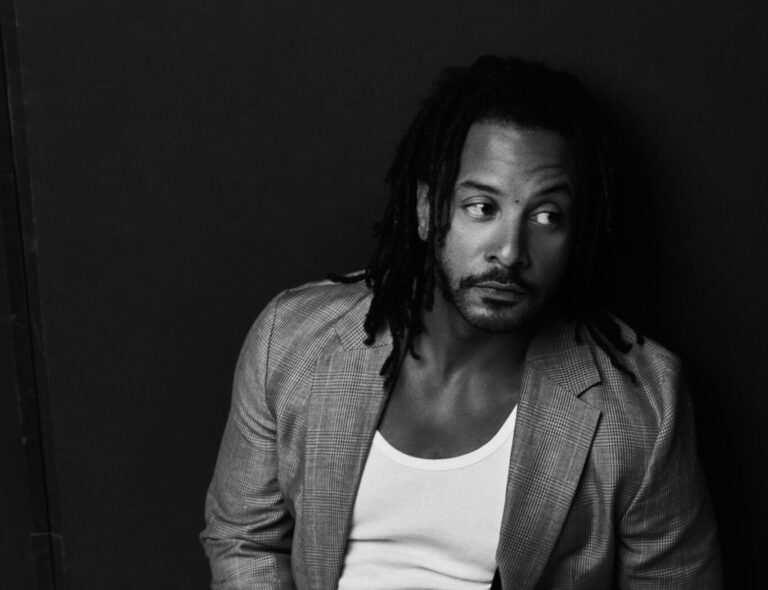
Staying power: our Autumn cover star Brandon Jay McLaren

Hero, villain, officer, father: Canadian actor Brandon Jay McLaren has range. Now, after more than 20 years on screen, he’s thinking about what comes next. By FQ Editor Lisa McGarry
Brandon Jay McLaren is sitting in a Vancouver café, AirPods in, looking unfairly box fresh for an actor with more than two decades of steady work on his CV. He’s home from LA to visit family, though not off duty: there’s an audition before he goes to hang with his dad.
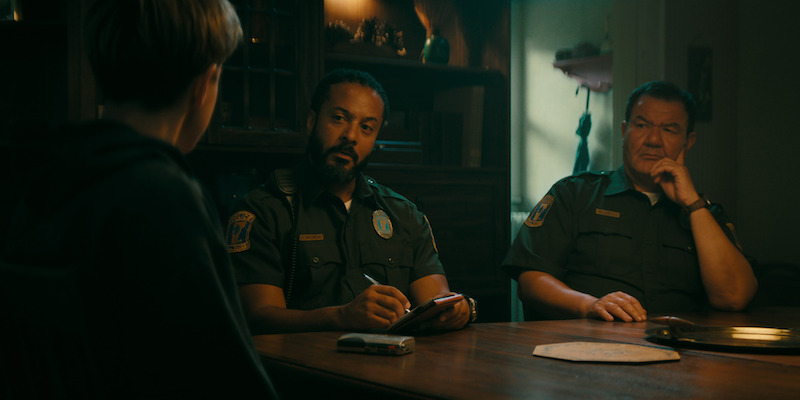
Currently starring alongside Mae Martin and Toni Collette as Officer Dwayne Andrews in Netflix’s Wayward, McLaren’s a regular on UK screens in shows like The Rookie, Firefly Lane, and of course: in his breakout role as the Red Ranger in Power Rangers.
FQ: You grew up in Vancouver with your Grenadian dad and Trinidadian mum. What was home like when you were a kid, and how much did Caribbean culture shape you?
BJM: I grew up with my younger brother, and my older brother who was born in Grenada also came to live with us: so yeah, Caribbean culture was always a focal point. When my teachers used to phone my dad complaining about my behaviour, they would quote something I’d said that was such a Caribbean phrase that my dad knew they must be telling the truth. I couldn’t lie and say, ‘it wasn’t me’, because he knew other kids wouldn’t say something like that.
Most of the friends I grew up with were guys from the Caribbean, and that continued when I went to university in New York. My friends there were mostly Caribbean-American or people from the Caribbean. So it definitely had a strong presence in my life.
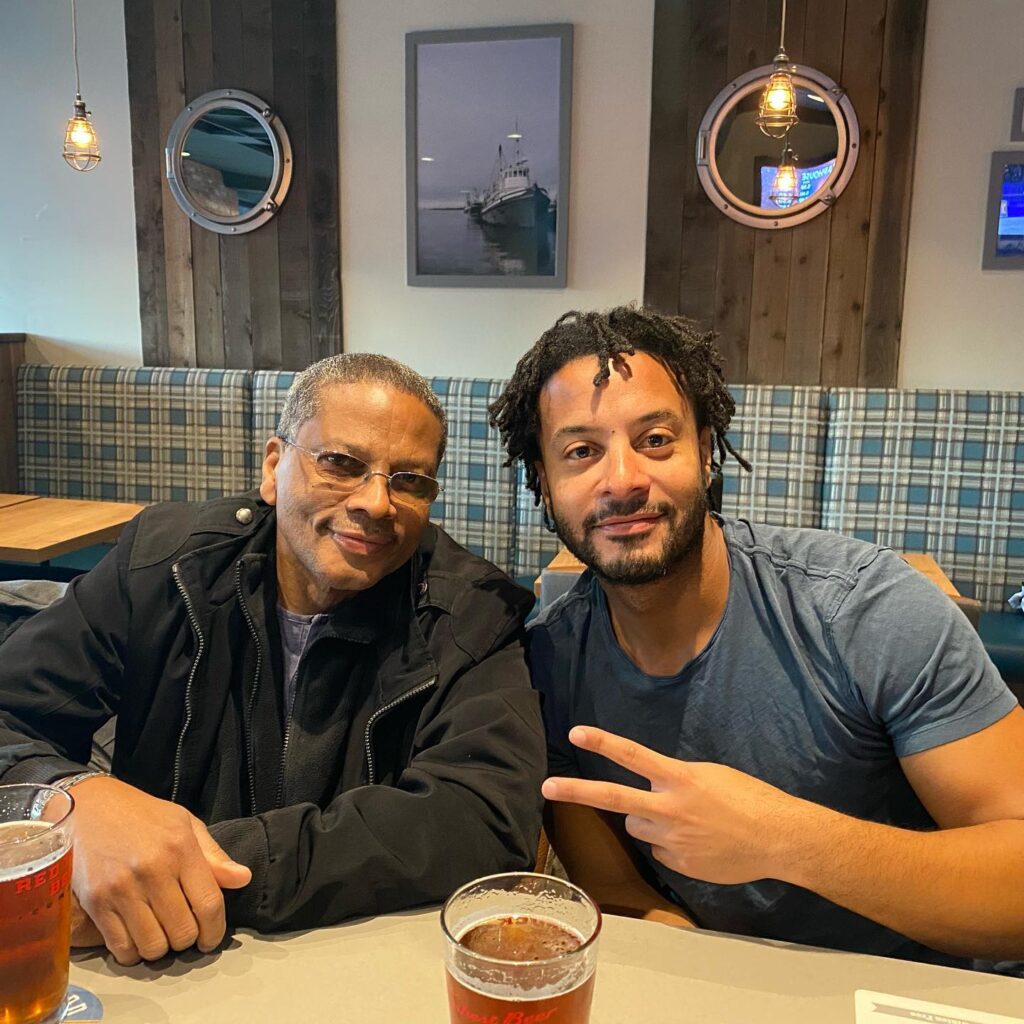
FQ: What was your relationship like with your dad growing up? What do you think you inherited from him – temperament, values or outlook?
BJM: I don’t know if this is Caribbean-specific, but when your parents are from another country, you understand that they might be a little different from your friends’ parents. They’ve had to do things in a different way. There’s this real undercurrent of respect for their journey, what they had to go through and what they had to sacrifice so that me and my brothers could have things they may not have had themselves.
FQ: You once got both your parents into speaking roles on one of your shows. Why was that important to you?
BJM: I like giving people opportunities where they might not otherwise have them. Both my parents were retired and they’d seen my acting journey and been around for it. When they retired they started auditioning for commercials – I think seeing me do my thing made them interested.
I was shooting a show in Vancouver during the pandemic, and these roles came up. I was reading the scripts and thought, ‘My dad could do that.’ So I asked if they’d mind auditioning my parents. They were in two different episodes, both speaking roles.
So there’s now a season of television that exists where me, my mum and my dad all appear. That’s pretty cool.
FQ: You’ve been acting for more than 20 years. Does it feel like one long continuous career or lots of different lives?
BJM: It feels like one big thing that’s been a very gradual progression. At no point has it ever felt overwhelming because it’s always been incremental in a way that was manageable. I’m grateful for that.
But I’ve done a lot of shows all over the place, so my life is kind of broken up into: ‘Oh, that’s the three years I spent in this country doing that,’ or, ‘That was the Miami show,’ or when I did a show in Budapest. Those become markers in my life.
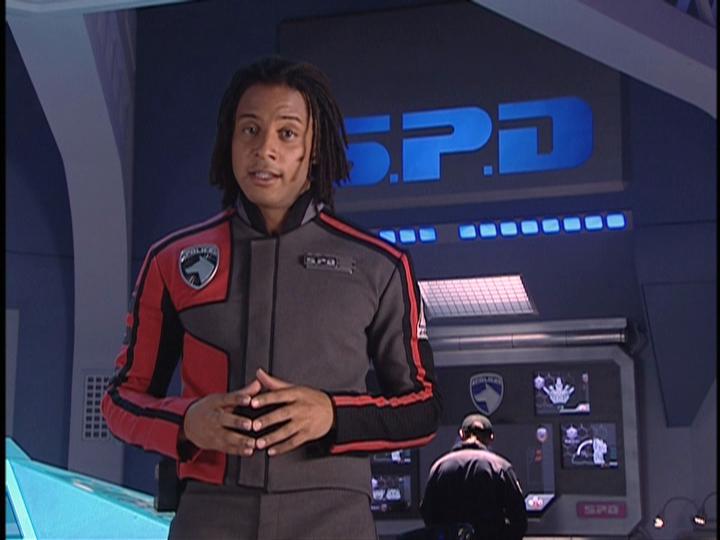
FQ: Power Rangers made you a childhood hero to a whole generation. Is it strange when adults tell you that you were their hero when they were eight?
BJM: It’s weird because a lot of them are much larger than I am now – they’re grown men! It’s something I could never have foreseen.
I recently met one of my own hip-hop heroes from when I was about 15, and now we talk on a pretty regular basis. So I get it from the opposite viewpoint. I understand and respect how important it is. It’s really cool to be a part of somebody’s childhood.
FQ: Did you understand at the time what it meant for Black children to see you as the Red Ranger and the leader?
BJM: When I got the part, I didn’t even know the Red Ranger was the leader. I only got wind much later of how important that role was within the franchise, and then the significance of me being Black.
Every time I go to a convention I hear it time and time again. It reinforces the idea that representation is important and that it impacts people in a meaningful way – so much so that 15 or 20 years later, people still feel compelled to tell me.
FQ: You’ve played heroes, villains, cops, addicts and dads. Do you gravitate more towards complicated men now?
BJM: I try consciously to do anything that is better written, and that typically means the characters are complicated. That’s usually a marker of good drama, good writing and good storytelling. So I think it’s more a function of that than me personally gravitating towards one type of character.
FQ: Did playing a dad on Firefly Lane (alongside Katherine Heigl) make you think differently about fatherhood or family?
BJM: I remember thinking: “Oh shoot, I’m in my dad era now?” Because I’d played a lot of characters who were more alpha types, but Travis was just a nice guy. Playing a character with a daughter softened me a little bit in terms of my performance. I felt that.
FQ: Do you feel a responsibility because younger people have looked up to you, or do you separate the people you play on screen from your personal life?
BJM: I like to separate the people on screen from my personal life. I don’t post a lot of personal stuff. At the same time, I understand deeply the profound effect playing these characters can have on people, so I take that very seriously in terms of the effort and care I put into my job. But it’s important to have some separation.
And there’s also that feeling of not needing validation from outside sources. You know the old saying: once you let the vampires in, you can’t tell them to leave. I just try to keep them out.
FQ: Grenada is clearly much more to you than simply where your dad is from. Has that connection to ancestry, identity and lineage become more important as you’ve got older?
BJM: Absolutely. Knowing where your people come from gives you something to live up to, something to honour. You think: these people before me did this so I can be here, and now there’s a standard I have to uphold.
If you know those stories, they give you a guiding light in terms of where you want to go, and a burden – in a good way – to carry on the torch.
When my grandmother died in Grenville, that was really life-changing for me. I heard all the stories about the things she had done in her life and it was so impressive. It put a battery in my back to think, ‘I’ve got to be here and also make a difference, and work my ass off.’
FQ: You’ve been involved in work supporting children in Grenada. Why was that important to you personally?
BJM: A lot of times circumstances can be too big for one individual to overcome. That doesn’t mean a person doesn’t have talent or brilliance or ambition, but sometimes the circumstances are just too hard.
For me, any time somebody gets an opportunity to be bigger than their circumstances, that’s a good thing. It levels things a little bit – maybe not a lot, but even a little bit can make a big difference. That’s why I do it.
FQ: You’ve talked about wanting to tell more Caribbean stories yourself. Is that becoming part of your next chapter?
BJM: That’s the only story I can tell, man. That’s my story. I don’t really know any other story.
I’d like to bridge the gap between those stories and the way my own life has gone, being in North America, and tell transitional stories where there’s some crossover. I think it’s important to try to reach as many people as possible. That’s the marker of great storytelling: when it can touch a wide swath of people in different ways. That’s my intention now.
FQ: You’ve worked for two decades in an industry where careers can disappear very fast. What are you proudest of about having lasted the course?
BJM: I don’t think you ever set out thinking, ‘I’m going to last this long.’ A lot of the time you’re just trying to get the next job. You’re not thinking ten years in advance; it’s one foot in front of the other.
What I’m most proud of is that, while doing that, I’ve always been preparing for something else. In my early twenties I was already thinking: eventually I’m going to age out of these roles and start playing older roles, so I need to work on that now, so that when those opportunities present themselves I’m ready.
It’s the same with the things I’m trying to develop now. I’ve been working on that for five or six years, knowing eventually I’d want to transition to the other side of the camera. I try to do both at the same time: exist in the present, but prepare a little for what’s on the other side of the road.
FQ: Can you tell us anything about where things are headed for your fan-favourite villain Elijah Stone in The Rookie?
BJM: All I know is I’m not dead yet, so as long as I’m not there’s a chance! I’d really love to finish off that arc in a cool way and have it tied up in a bow. They had me back for that little cameo in season eight, and who knows? There’s always maybe a little window where I can slide back in.
FQ: How has your idea of success changed as you’ve got older?
BJM: Where I’m at right now, I just have a deep need to make things. The music stuff came out relatively recently, and it’s terrifying but also self-fulfilling. (Brandon and his older brother released a hip hop album with R&B and Caribbean influences last year, Songs for TV, under the name McLaren).
I just feel the need to keep on making things – good or bad, successful or not. That part isn’t consequential. As long as I wake up every morning with the urge to make things that I care about, and have the discipline to follow through, that’s success to me.
FQ: Wayward is a very dark story. What interested you about its ideas around parenting teenagers, care and control?
BJM: There’s a Netflix documentary about the kinds of schools the show is based on [The Program: Cons, Cults & Kidnapping]. These places existed. Kids could be taken away in the middle of the night and sent to these weird, unregulated schools.
Mae [writer and star Mae Martin] has this really interesting perspective on it. The idea that being a teenager is a problem that needs to be solved – that there’s something inherently wrong or deficient about it that needs to be cured – is really the crux of the show. I find that fascinating.
FQ: What are you looking for now: the biggest role, the best role, or the chance to create something that feels genuinely yours?
BJM: The last one, absolutely. Often, as an actor – and this is what you sign up for – you’re a hired gun. But after you’ve worked for so long, in so many different capacities and so many types of production, you start to have your own ideas.
There’s something really special and gratifying about realising your own ideas. So yeah, that’s what I’m trying to do.
Read the full interview in the FQ Autumn e-zine

More from Entertainment & Culture