Stronger for Longer: Why Creatine Is Gaining Attention Beyond the Gym

From maintaining muscle strength in midlife to making the most of limited gym time, creatine is attracting attention well beyond professional sport. But what does the science actually tell us, and could it have a place in the everyday fitness routines of busy fathers?
For many men, staying fit becomes increasingly challenging as family and professional responsibilities grow. Between work, parenting, household commitments and trying to find enough time to sleep, regular exercise can easily slip down the priority list.
Yet maintaining muscle strength and physical fitness becomes more important as we get older.
While there’s no magic solution to staying strong, one supplement has become the subject of considerable scientific interest: creatine.
Long associated with bodybuilders and elite athletes, creatine is now attracting attention from a much wider audience, including men in their forties, fifties and beyond who simply want to maintain their strength, improve their training and support an active lifestyle.
So, is it worth considering?
Understanding Creatine: What Does It Actually Do?
Creatine is a naturally occurring compound produced by the body and obtained through foods such as meat and fish.
Most of the body’s creatine is stored in skeletal muscles, where it helps replenish adenosine triphosphate (ATP), the primary energy source used during muscular contractions.
During short bursts of intense physical activity, such as lifting weights, sprinting or performing repeated high-intensity exercises, muscles rapidly consume available energy.
Creatine helps the body replenish that energy more efficiently.
This is why creatine monohydrate has become one of the most extensively researched supplements in sports nutrition.
Scientific evidence supports its ability to improve physical performance during successive bursts of short-term, high-intensity exercise. Research also indicates that, when combined with resistance training, creatine supplementation can help improve strength and support increases in muscle mass.
However, it is important to understand what creatine doesn’t do.
It isn’t a stimulant, doesn’t replace good nutrition and won’t build muscle without appropriate exercise.
Its value lies in supporting the body’s ability to perform demanding physical activity.
Why Strength Matters More as We Get Older
For men approaching middle age, fitness isn’t necessarily about achieving a particular physique.
Increasingly, it’s about maintaining strength, mobility and the ability to enjoy everyday life.
Muscle mass and strength tend to decline with age, particularly when physical activity levels fall. This process can eventually affect balance, physical capability and independence.
Regular resistance training is one of the most effective ways to counteract this decline.
And the benefits extend well beyond the gym.
Whether it’s carrying young children, lifting luggage, playing football in the park, enjoying a round of golf or simply feeling physically capable, maintaining strength can make everyday activities easier.
For fathers juggling multiple responsibilities, even two or three well-structured weekly strength sessions can be a valuable investment in long-term health.
Creatine may provide additional support when combined with that training.
Studies involving older adults have found that creatine supplementation alongside resistance exercise can improve certain measures of muscle strength and lean body mass, although results vary between individuals.
The central message remains straightforward: regular exercise comes first, and supplementation may provide an additional benefit.

Making Limited Training Time Count
Not everyone has the luxury of spending hours in the gym.
For many fathers, a successful fitness routine might involve a couple of early-morning workouts, a weekend run or a short session squeezed between meetings and collecting the children.
This makes the quality and consistency of exercise particularly important.
Creatine supplementation can help improve performance during repeated high-intensity efforts, potentially supporting greater training capacity over time.
For example, someone following a resistance-training programme may find that creatine helps them sustain performance across demanding sets.
Those small improvements can contribute to longer-term progress when combined with progressive training and adequate recovery.
But expectations should remain realistic.
Creatine won’t compensate for inconsistent exercise, insufficient sleep or poor dietary habits.
It’s best viewed as one possible component of a broader fitness routine.
Does the Type of Creatine Matter?
With so many supplements available, understanding what you’re buying can sometimes feel unnecessarily complicated.
Creatine is sold in several forms, often accompanied by claims about enhanced absorption or superior performance.
However, creatine monohydrate remains the most extensively researched form, with substantial evidence supporting its effectiveness.
There is currently no convincing body of evidence showing that newer, often more expensive forms consistently outperform standard creatine monohydrate.
For consumers, this makes ingredient simplicity an important consideration.
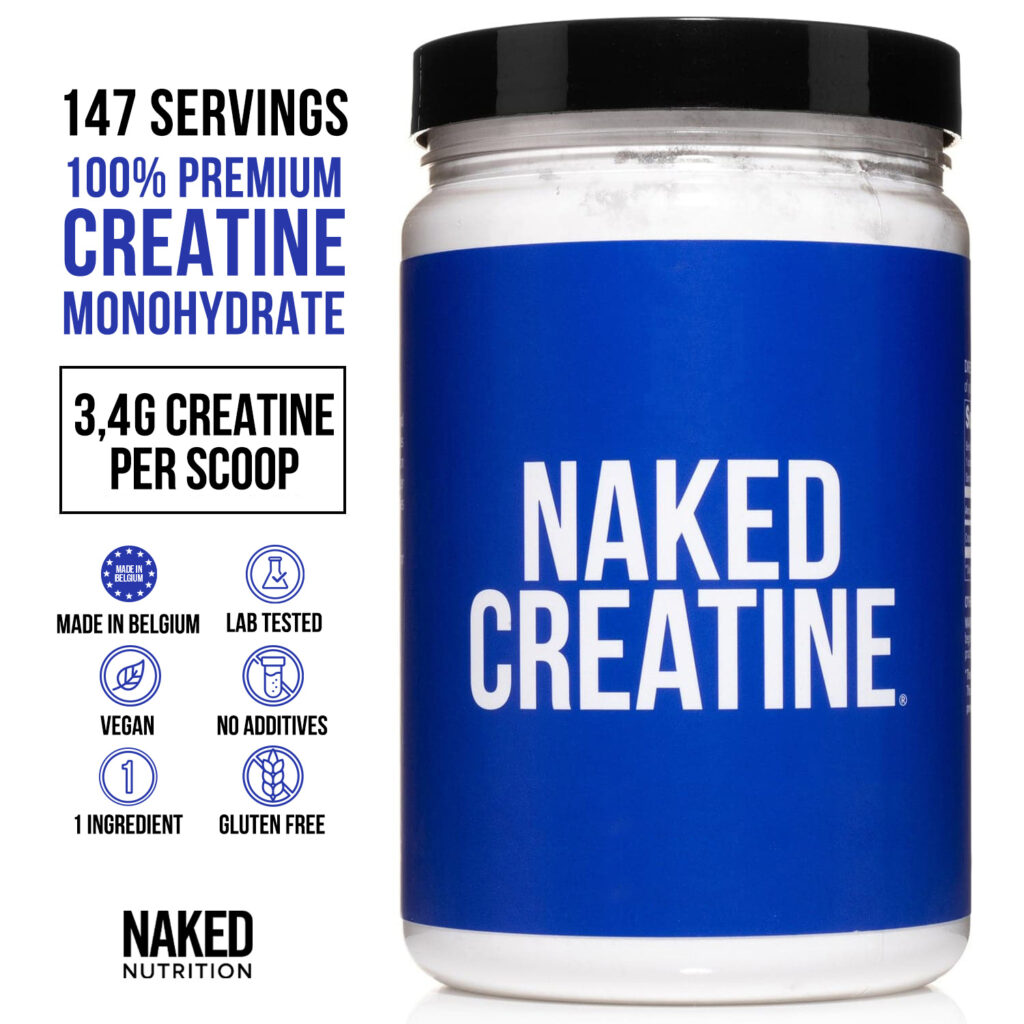
For example, Naked Creatine by Naked Nutrition contains a single ingredient: micronised creatine monohydrate, without added fillers, artificial sweeteners or colours.
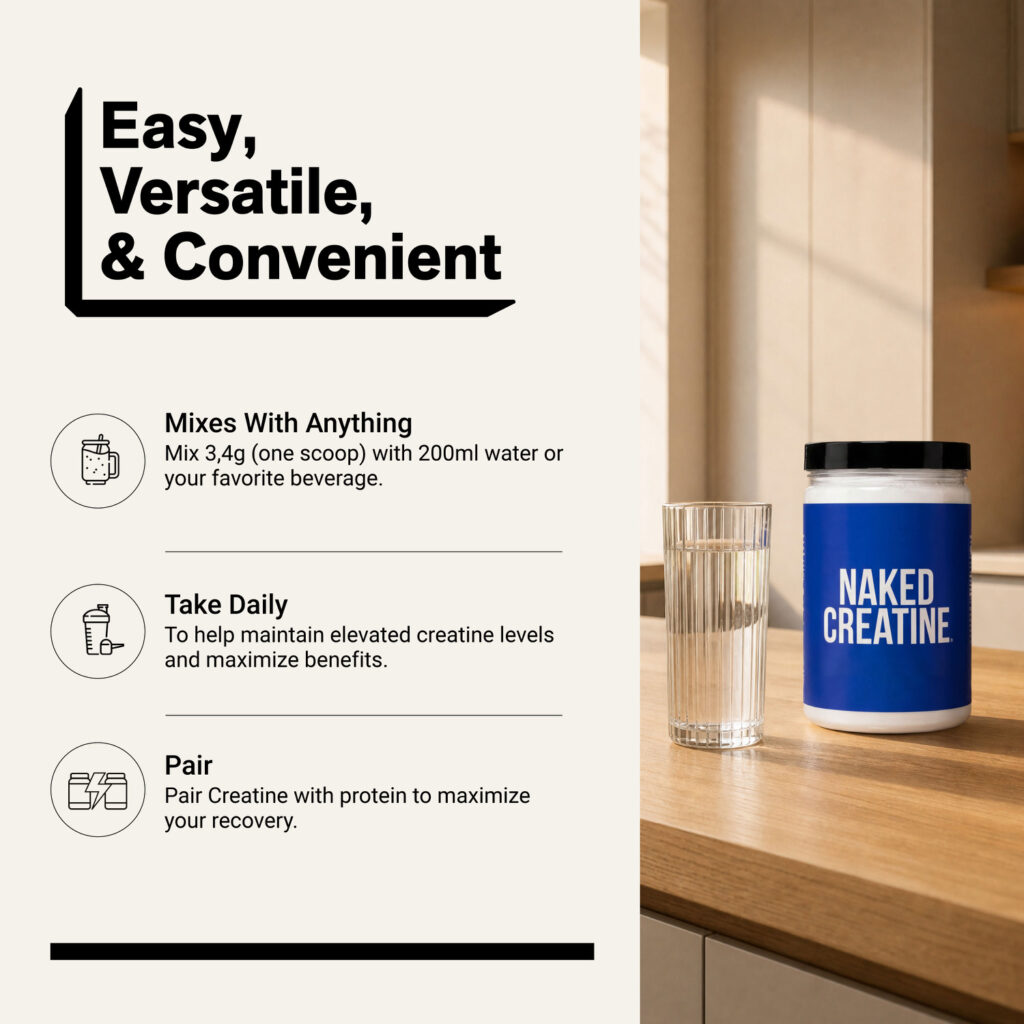
The unflavoured powder can be mixed into water, smoothies or protein shakes, illustrating how easily creatine can be incorporated into an existing daily routine.
Ultimately, the most important considerations are choosing an appropriate formulation, understanding the ingredients and using supplements responsibly.
How Much Creatine Is Needed?
One of creatine’s practical advantages is that it doesn’t require a complicated supplementation schedule.
A daily intake of 3g of creatine produces the established beneficial effect on physical performance during successive bursts of short-term, high-intensity exercise.
Many research protocols use approximately 3–5g of creatine monohydrate per day.
Some people begin with a short loading phase involving larger daily amounts to increase muscle creatine stores more quickly.
However, this isn’t essential.
Consistent daily supplementation can also increase muscle creatine stores over several weeks.
Creatine can be taken on both training and rest days, and maintaining a regular routine is generally more important than taking it at a particular time of day.
As with any supplement, consumers should follow the product’s usage instructions and seek professional advice where appropriate.
What About Weight Gain?
One concern occasionally raised about creatine is its association with weight gain.
It’s true that people beginning creatine supplementation may notice an increase on the scales.
However, this initial change is often linked to increased water stored within muscle tissue rather than an increase in body fat.
Over a longer period, creatine combined with resistance training may also support gains in muscle mass.
For men aiming to improve body composition, it’s therefore important to distinguish between changes in body weight, muscle development and body fat.
The scales alone rarely tell the whole story.
Fitness Is About More Than Supplements
Perhaps the most important consideration is that maintaining good physical health requires a combination of habits rather than relying on a single product.
Resistance training helps preserve muscle strength, while cardiovascular exercise supports heart and lung health.
Adequate protein contributes to muscle maintenance and recovery, and good-quality sleep plays an essential role in physical and mental wellbeing.
Creatine may complement these foundations, but it cannot replace them.
For busy fathers, the most effective approach is often the simplest: establish a realistic exercise routine, eat well, prioritise recovery and make gradual improvements that can be maintained over time.
The Bigger Picture: Investing in Long-Term Strength
As conversations around men’s health continue to evolve, there’s growing recognition that fitness should be measured by more than appearance.
Maintaining strength, mobility and physical confidence into later life can have a meaningful impact on everyday wellbeing.
Creatine has earned its place in sports nutrition through decades of research, and its potential benefits are relevant to more than professional athletes.
For men already incorporating resistance training into their lives, it may be a useful addition to an established routine.
But ultimately, the greatest investment remains the commitment to staying active.
Because being strong isn’t just about what happens in the gym. It’s about having the physical confidence and capability to enjoy everything that happens outside it.
Health note: This article is intended for general information only and does not constitute medical advice. Anyone with an existing medical condition, particularly kidney disease, or taking medication should seek advice from a qualified healthcare professional before beginning supplementation.